
Shaping the Future of Green IT: My Appointment to the Inaugural ACS Sustainability Technical Committee
I am proud to announce my appointment to the Australian Computer Society’s (ACS) inaugural Sustainability Technical Committee for a two-year term.
As the Founding Director of Sustainably Digital, my mission is to help organisations uncover the hidden environmental costs of their technology operations. Through this new committee, I will collaborate with leading industry and academic experts to shape national standards, address ESG goals, and tackle urgent challenges like AI energy demands and e-waste. It is time for ICT professionals to own their environmental impact and make digital sustainability measurable, credible, and actionable.
The Hidden Environmental Cost of AI: Four Critical Questions Every Australian Board Director Must Ask
AI's environmental footprint represents a critical and largely unaddressed governance risk for Australian board directors.
This article examines four key questions spanning director liability under Section 180 of the Corporations Act, Scope 3 emissions obligations under Australia's mandatory AASB S2 climate reporting regime, the physical resource demands of AI infrastructure — including energy, water, and e-waste — and the emerging legal risk of "AI-washing" under Australian Consumer Law.
Directors are urged to adopt practical governance frameworks and fit-for-purpose AI selection practices to manage these material and escalating risks.
The Cloud Has Weight: My Feature in Blooming Sustainability Edition 58
In The Cloud Has Weight, in this guest article our founding director Tim Prosser exposes the hidden physical footprint of digital operations. He critiques inaccurate spend-based carbon measurements, advocating instead for granular, activity-based tracking.
Highlighting rising procurement demands for emissions transparency, Prosser demonstrates how digital sustainability aligns with financial ROI—such as decommissioning idle "zombie servers" to simultaneously cut costs and carbon. He emphasises New Zealand's competitive green energy advantage and urges organisations to make sustainability a core IT design constraint early in the development process. Ultimately, Prosser calls for vital collaboration between IT, finance, and sustainability teams to reduce the digital economy's environmental impact.
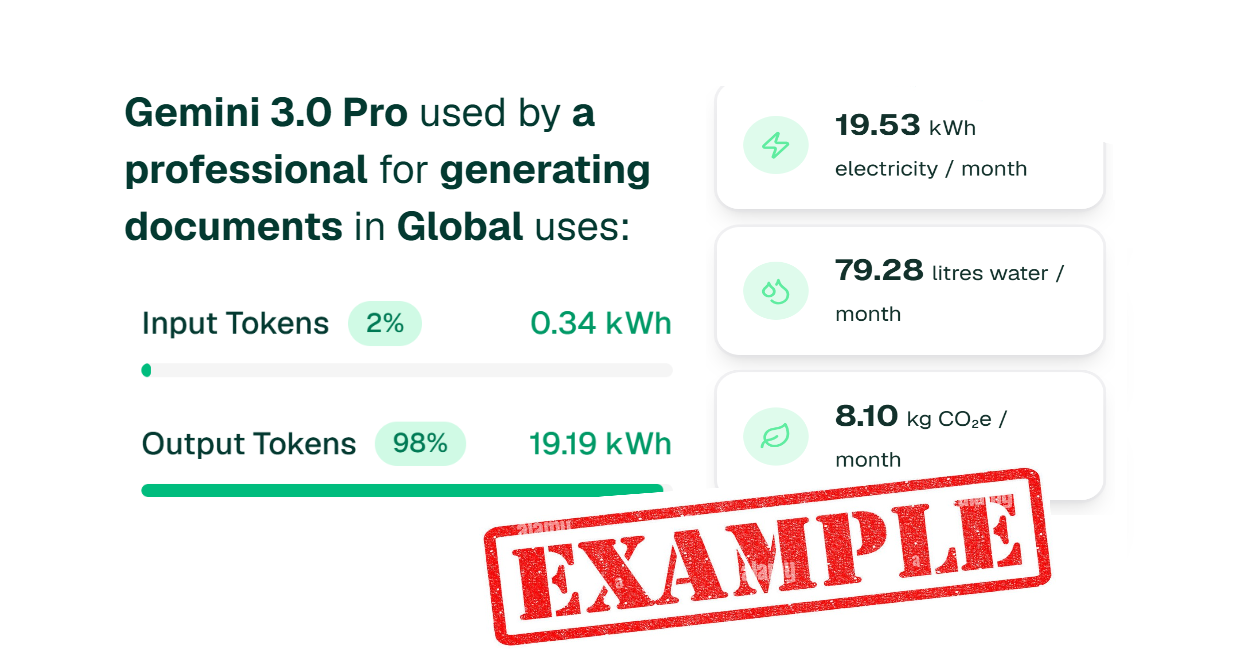
Demystifying the Environmental Footprint of AI: How to Calculate Energy, Carbon, and Water Consumption
This blog post explains the complexity of calculating the environmental footprint—energy, carbon, and water—of Artificial Intelligence, particularly Large Language Models (LLMs).
Because AI workloads are highly variable, accurate measurement requires granular, instance-level data across four areas: model and hardware specifications, token-level energy consumption, workload dynamics (like caching and batching), and local grid data.
Once measured, organisations can apply "AI GreenOps" to reduce their impact. By right-sizing models, optimising prompt lengths, and maximising hardware efficiency, businesses can sustainably manage their AI integration while minimising resource consumption and emissions.

The Sustainable IT ESG Standards V2.0 Are Here — What IT and Sustainability Leaders Need to Know
February 2026 marks a pivotal moment for IT and sustainability professionals. SustainableIT.org has released Version 2.0 of its Sustainable IT Standards Taxonomy — the most significant update since the framework launched in 2023.
Covering responsible AI governance, water sustainability, technology circularity, and supply chain accountability, V2.0 gives IT and sustainability leaders the granular, actionable metrics needed to measure, manage, and report on technology's environmental and social impact. Whether you're navigating CSRD compliance or building your sustainability roadmap, this update deserves your attention.

PODCAST: Behind the Prompt- Data Centres, Water, and Australia's Energy Crunch (Part 2)
I recently joined the Green Fix Podcast to examine the escalating environmental impact of data centres amid the global AI boom.
The conversation explores the hidden energy and water demands of digital infrastructure, Australia's looming grid reliability gap, and the economic consequences of unchecked data centre growth. I challenged the adequacy of carbon offsetting, makes the case for 24/7 clean energy matching, and unpacks how data centres can evolve from passive power consumers into active grid assets — while confronting the growing freshwater crisis driving urgent innovation in cooling technology.
From Ambition to Action: What the 2025 Global Sustainability Barometer Means for ANZ Tech and Sustainability Leaders
The 2025 Global Sustainability Barometer reveals a critical mandate for ANZ technology and sustainability leaders: transition from ambitious net-zero targets to tangible execution.
As the line between environmental responsibility and business performance vanishes, proving measurable ROI has become the primary catalyst for momentum. To succeed, organisations must transform IT into an enterprise-wide sustainability engine rather than operating in silos. Furthermore, leveraging advanced technologies like Predictive and Agentic AI is essential for moving from reactive reporting to autonomous, data-driven optimisation. However, leaders must first overcome significant data integration barriers to build unified platforms that drive real-time insights and competitive advantage.
Confronting the Elephant in the Room: AI, Data Centres, and the Path to True Digital Sustainability
Explores the environmental "elephant in the room" of the AI revolution: the immense resource consumption of physical data centres. Reflecting on a recent panel at Climate Action Week Sydney 2026, I contrast AI’s problem-solving "handprint" with its staggering ecological "footprint," noting that Sydney's data centres could consume 25% of the city's drinking water by 2030. To ensure sustainable digital transformation, the post outlines three critical imperatives: enacting strict policies requiring additional renewable energy, embracing circular economy practices for water and minerals, and implementing granular emissions tracking. Australia must act now to build sustainable digital infrastructure.

From Disclosure to Delivery: What the Latest World Benchmark Alliance Research Means for Digital Sustainability in Australia
Explore the critical gap between corporate sustainability commitments and actionable delivery in Australia, drawing on World Benchmarking Alliance (WBA) research presented at Climate Action Week Sydney ‘26.
While corporate governance around sustainability is improving, actual financial resourcing and execution lag significantly. The escalating environmental footprint of the digital sector, driven by AI and data centres, poses severe climate and water stress risks. Furthermore, Australian companies frequently overlook Scope 3 emissions and crucial social dimensions, including Indigenous rights. To achieve true digital sustainability, tech leaders must transition from high-level disclosures to comprehensive, resourced, and socially equitable transition plans.

PODCAST: Your Cloud Has a Dirty Secret: The Hidden Carbon Footprint of Your Company’s Tech (Part 1)
In this episode of the Green Fix Podcast, I return to discuss the maturing landscape of Digital Sustainability. Hosts Loreto Gutierrez and Dan Leverington explore the hidden environmental costs of enterprise technology, warnings against relying on unverified vendor carbon data. The discussion highlights staggering emission reporting variances within the financial sector and the urgent need to transition from spreadsheets to auditable, high-provenance data. Introducing the "Sustainability Value Triangle"—aligning Finance, IT, and Sustainability teams—to ensure accurate climate disclosures and mitigate greenwashing risks in an increasingly regulated market.

GREEN TECH Month: Top 10 Things Tech Workers Can Do to Reduce Their Carbon Footprint
Practical, field-ready actions for tech professionals to shrink the ICT sector’s carbon footprint.
Framing Sustainable IT around Footprint (harm minimisation), Handprint (positive enablement), and Heartprint (societal well-being), it translates high-level sustainability into ten concrete steps: extend hardware life, code for energy efficiency, delete dark data, choose low-carbon cloud regions, adopt Green AI, optimize video conferencing, set aggressive power management, embrace circularity, leverage purchasing power, and champion sustainability within teams. It highlights governance implications, measurable impacts, and the role of individuals in driving systemic change toward a greener digital future.
WEBINAR - Digital Sustainability: Reducing Technology-Based Emissions and Driving Enterprise Value
Digital Sustainability is moving from peripheral ESG topics to core enterprise strategy. This blog summarises a webinar with Generate Zero on reducing technology-based emissions and unlocking business value. It highlights a historic blind spot: the digital realm, traditionally overlooked in sustainability audits. By reframing digital impacts as strategic opportunities, the discussion offers key takeaways and candid insights on integrating digital practices into broader decarbonisation efforts and value creation for the enterprise.
From "Black Box" to Green Ledger: Unlocking Digital Sustainability with TBM
Technology Business Management (TBM) can help transform digital sustainability by turning IT from a black box into a granulated, accountable resource. In this post I outline how TBM links IT cost to business value and environmental impact, enabling precise hotspot identification, GreenOps accountability, and Scope 3 transparency. It highlights tracking AI workloads, hardware lifecycles, and consumption at the application level to drive targeted emissions reductions, justify sustainability investments, and align CIO, CFO, and CSO goals in the era of rigorous reporting (e.g., CSRD). The result is a shared language for governing digital sustainability across the enterprise.

CASE STUDY: UK Gov Unlocking Hidden Tech Carbon: Insights for Australian Tech Leaders
Case study on applying UK Government Digital Sustainability Alliance (GDSA) Scope 3 insights to Australia’s tech sector. It emphasises that Scope 3 emissions—often 70–90% of digital carbon—require a practical “Operate and Improve” approach: baseline measurement, engaged procurement, and circular reuse.
Key levers include extending asset life (right-sizeing), sustainable procurement with product-level data and second-life hardware, and correcting myths that green energy alone eliminates carbon. The post translates these insights into Australian practice: align with federal targets, challenge global suppliers, and prioritize logistics to reduce Scope 3 more than Scope 2. A concrete three‑phase action plan and checklist guide practitioners toward tangible reductions in ICT emissions.
The CTO’s New Mandate: From Tech Enabler to Sustainability Orchestrator
A 2026 global study presented at this years World Economic Forum in Davos reveals a pivotal shift in corporate sustainability: it has transitioned from a boardroom ambition to a technology execution challenge. Surveying 600 Chief Technology Officers, the research confirms that CTOs are now the "operational backbone" of the green agenda, moving beyond support roles to actively drive decarbonisation through code and infrastructure. While economic incentives currently prioritise energy efficiency and AI optimisation, significant barriers remain, including "digital debt," poor data quality, and a critical shortage of "Green Technologists" who bridge the gap between IT and environmental science. The future requires systemic, not just opportunistic, change.
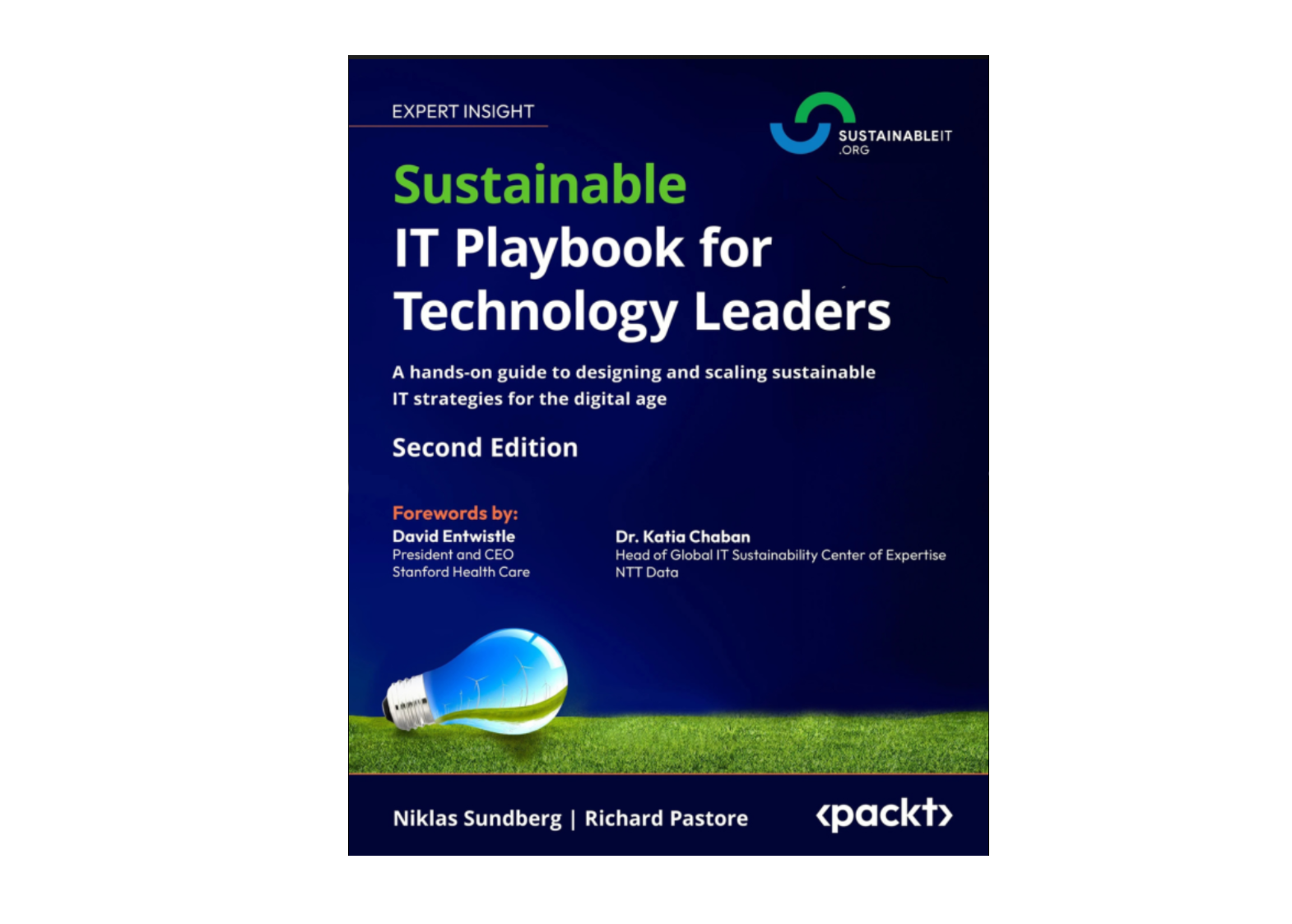
BOOK Review: Sustainable IT Playbook
Sustainable IT Playbook for Technology Leaders (Second Edition) reframes IT leadership around climate responsibility as a core strategic imperative. The book guides CIOs, CTOs, and senior IT leaders through a three-part framework—why, what, and how—bridging ethical rationale with actionable practice.
It emphasises measurable outcomes via an emissions baseline, governance structures, and practical KPIs, complemented by the Sustainable IT Reference Model and maturity dashboards. With updates on responsible AI governance, risk, and regulatory context, the work includes real-world case studies and downloadable templates from SustainableIT.org. While broad in scope, it offers a solid, implementable road map for translating sustainability into scalable IT transformation.

The 2026 Australian Cloud Reality Check
The 2026 Australian Cloud Reality Check assesses the carbon-intensity of regional cloud infrastructures amid the global shift toward Sustainability by Design. Despite a solar-led expansion, Australian cloud regions exhibit a driver of high emissions, routinely earning low E/F grades versus European leaders. A notable outlier is New Zealand’s `newzealandnorth` (Grade B), offering markedly lower carbon footprints (upto 90%) and meaningful latency compatibility for ANZ workloads. GreenOps-driven strategies: relocate non-latency-sensitive and batch workloads to lower-impact regions, optimise utilisation, and time-shift processing, while respecting data sovereignty. It emphasises proactive, architecture-level decisions to achieve Net Zero targets in 2026.
Greener Bytes: Digital Sustainability Trends to Watch in 2026
As we approach 2026, sustainability in technology enters a decisive new phase: moving from aspirational pledges and marketing language to measurable impact driven by data, accountability, and operational integration. Grounded in insights from leading IT sustainability think tanks and market analysts, this piece outlines the emergent landscape and the practical shifts IT leaders must embrace.

The Decisive Decade: Why Australia’s Climate Tech is Moving from Breakthroughs to Billion-Dollar Scale
The 2025 Australian Climate Tech Industry Report signals that the sector has moved beyond early-stage innovation to focus on the essential "one to one hundred" scaling phase necessary for deep decarbonisation.
This momentum is supported by significant capital flow, with over $680 million in Venture Capital raised in 2025, and a growing workforce of more than 7,000 people.
For enterprise, the introduction of mandatory climate-related reporting for approximately 6,000 Australian companies is a primary driver, forcing a strategic shift towards evidence-based solutions. However, scaling capital-intensive deep tech requires overcoming the reliance on offtake agreements ("If you build it, we will buy it"), which are identified as the missing link for securing financing and commercialising innovations.

Beyond the Cloud: Why Digital Sustainability is Australia’s Next Environmental Frontier
The World Economic Forum examines the environmental impact of Australia's digital sector and advocates for a "Nature Positive" transition by 2030. The tech industry's hidden costs include 1.5 trillion litres of annual water consumption globally, energy demands rivalling Japan's usage, and 60 billion kg of e-waste yearly. Addressing these impacts could unlock $800 billion globally by 2030. Key Australian priorities include designing for circularity, investing in e-waste infrastructure , implementing closed-loop water systems, and decarbonising building materials. Success requires coordinated action among tech companies, policymakers, and customers. The central argument: digital sustainability is both an environmental necessity and a strategic economic opportunity for Australia's tech sector.