Greener Bytes: Digital Sustainability Trends to Watch in 2026
As we approach 2026, the conversation around digital sustainability is undergoing a radical shift. We are moving past the era of vague net-zero pledges and "green" marketing buzzwords into a new phase defined by hard data, accountability, and operational integration.
Based on insights from leading IT sustainability think tanks and market analysts, here are the key trends that will define the sustainable technology landscape in 2026:-
1. The "Sustainable AI Paradox" Takes Centre Stage
Artificial Intelligence is a double-edged sword. While AI is being deployed to optimise energy grids and supply chains, the technology itself is incredibly resource-intensive. In 2026, the scrutiny on the environmental cost of AI will intensify.
The Problem: AI models require massive amounts of energy and water for training and operation.
The Trend: Organisations will demand "net environmental benefit" proof. It will no longer be enough to use AI for sustainability; the efficiency gains must outweigh the carbon footprint of the AI compute itself.
What to expect: A push for granular transparency. IT directors will reject global averages in favour of location specific metrics showing the impact of individual workloads based on region and time of use.
2. From "Reporting" to "Decision Intelligence"
For years, sustainability data was gathered primarily for compliance reports—a "tick-box" exercise. In 2026, this data will move from static dashboards to active decision-making engines incentivising action.
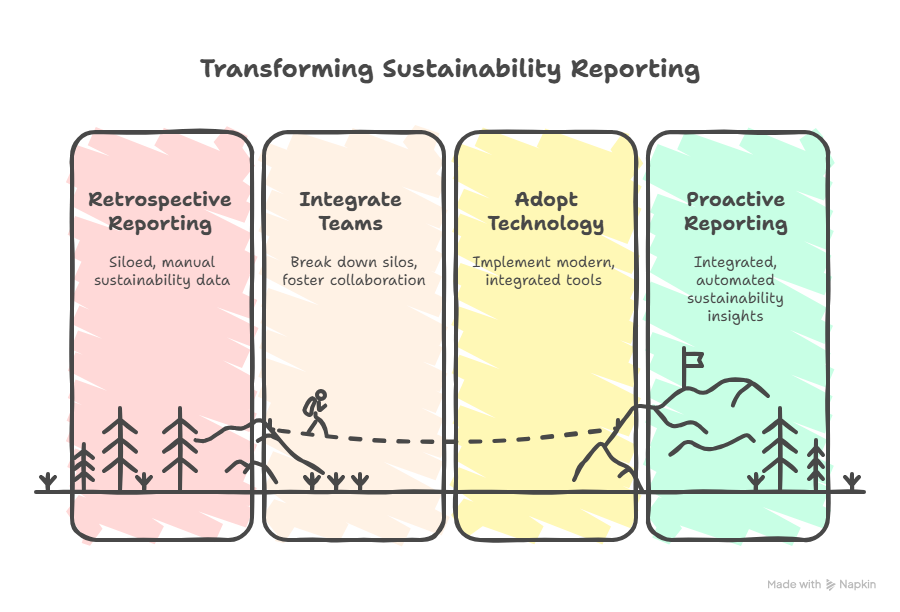
The Shift in Data Usage: Old Approach (Pre-2025) and the New Approach (2026 & Beyond)
3. The Rise of "Investor-Grade" Sustainability Data
Regulatory landscapes are shifting. While some frameworks like the EU's CSRD (Corporate Sustainability Reporting Directive) are evolving, the pressure is increasingly coming from the money men—investors, lenders, and insurers.
In 2026, sustainability data will need to be "investor-grade." This means it must be as rigorous, auditable, and traceable as financial data. Vague claims of a "carbon-neutral cloud" without verifiable metrics will be viewed as a financial risk rather than a selling point.
4. Scope 3: The Supply Chain Dragnet
The concept that "everybody is somebody else's Scope 3" will become a harsh reality for smaller businesses in 2026. Even if a small software vendor isn't directly regulated, their large enterprise clients will demand carbon data to fulfill their own Scope 3 (indirect emissions) reporting requirements.
Supply Chain Visibility: Major enterprises will require partners to disclose emissions data as a prerequisite for doing business.
No Hiding Place: Suppliers claiming they "can't provide data" will be seen as hiding something or lacking governance.
5. Energy Resilience as a Core IT Strategy
With aging power grids and geopolitical instability causing price volatility, energy is no longer just a cost item—it's a risk factor.
Key mitigation strategies for 2026 include:
Microgrids & Distributed Energy Resources: Adoption of DERs (solar, battery storage) to power data centres and edge sites independently of the main grid.
Fixed-Price Contracts: Locking in renewable energy via long-term Power Purchase Agreements (PPAs) and 24/7 carbon free energy hourly matching contracts to shield against price spikes.
Climate Adaptation: Physically reinforcing infrastructure against extreme weather events (floods, cyclones, heatwaves) that threaten cooling systems and server farms.
6. The Circular Economy for IT Hardware
The "take, make, waste" model is expiring. With digital waste tracking regulations coming into effect (such as in the UK in April 2026), the focus will shift to extending the lifecycle of hardware.
Modular Design: Prioritising hardware that can be easily repaired or upgraded.
Refurbishment: A growing acceptance of refurbished enterprise gear to lower embodied carbon.
Lifecycle Procurement: Public sector and large enterprise tenders will heavily weight the end-of-life plan for hardware during the buying process.
Conclusion
The theme for 2026 is integration. Sustainability is no longer a side project; it is becoming the operating system of modern business. For IT leaders, the challenge is clear: stop relying on averages, start demanding real data, and ensure your digital transformation isn't costing the Earth.
References
Sustainability Technology Activity Index 2025 - UK market shaping trends [Tech Market View July 2025]
Sustainability Technology Activity Index 2025 - Global market shaping trends [Tech Market View July 2025]