WEBINAR - Digital Sustainability: Reducing Technology-Based Emissions and Driving Enterprise Value
Earlier this week, I had the privilege of partnering with Generate Zero to discuss a topic that is rapidly moving from the periphery of ESG discussions to the very centre of corporate strategy: Digital Sustainability.
As sustainability practitioners, we are often comfortable dealing with the physical world. We know how to audit supply chains, electrify fleets, and decarbonise facilities. But during the session, we shone a light on a historic blind spot: the digital realm.
If you missed the live session, I wanted to share the key takeaways and the "uncomfortable truths" we unpacked regarding our technology habits.
1. The "Cloud" is Not Weightless
We use metaphors like "The Cloud" or "Virtual Machines" because they imply weightlessness. These are dangerous euphemisms.
During the presentation, I referenced recent research from Nature Communications that challenges our assumptions about "clean" digital growth.
The data is sobering:
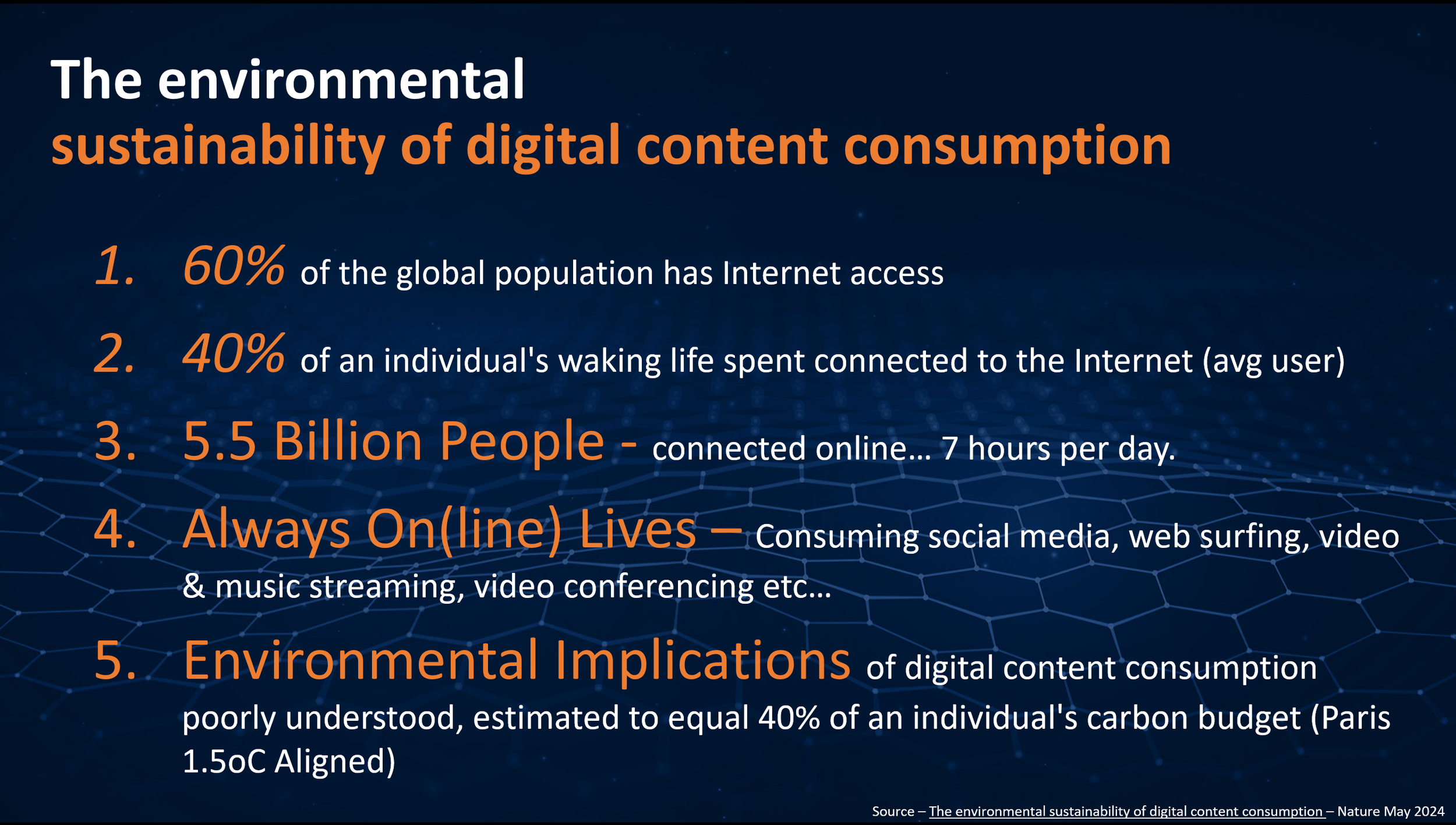
The average person now spends 40% of their waking life online.
This consumption generates approximately 229 kg of CO2e annually per user.
To stay within a 1.5°C carbon budget, digital consumption alone eats up 40% of a human being’s sustainable carbon allowance—before they even commute, eat, or heat their home.
2. Green Energy is Not a Silver Bullet
A common counter-argument I hear is, "We’ll just switch to renewable energy." While decarbonising the grid is vital, it solves only half the problem.
Digital sustainability isn't just about carbon; it is about planetary boundaries. Even if we achieve a 100% green grid, the extraction of lithium, cobalt, and copper for hardware remains a massive threat. Current digital habits consume 55% of the per capita carrying capacity for mineral and metal resources.
If your KPIs track Power Usage Effectiveness (PUE) but ignore material circularity, you are managing only half the risk.
3. The 99% Variance: Why Granular Data Matters
One of the most impactful moments of the webinar was a case study from a global financial firm. Like many, they started by reporting emissions using standard spend-based estimates (multiplying IT spend by average emissions factors).
However, when they matured to precise, activity-based accounting (measuring actual electricity consumed and hardware utilised), they discovered a 99% variance in emissions compared to their previous reporting.
That is not a margin of error; that is a blind spot. It proves that we cannot manage what we cannot see.
4. Where Do You Stand? (The Maturity Model)
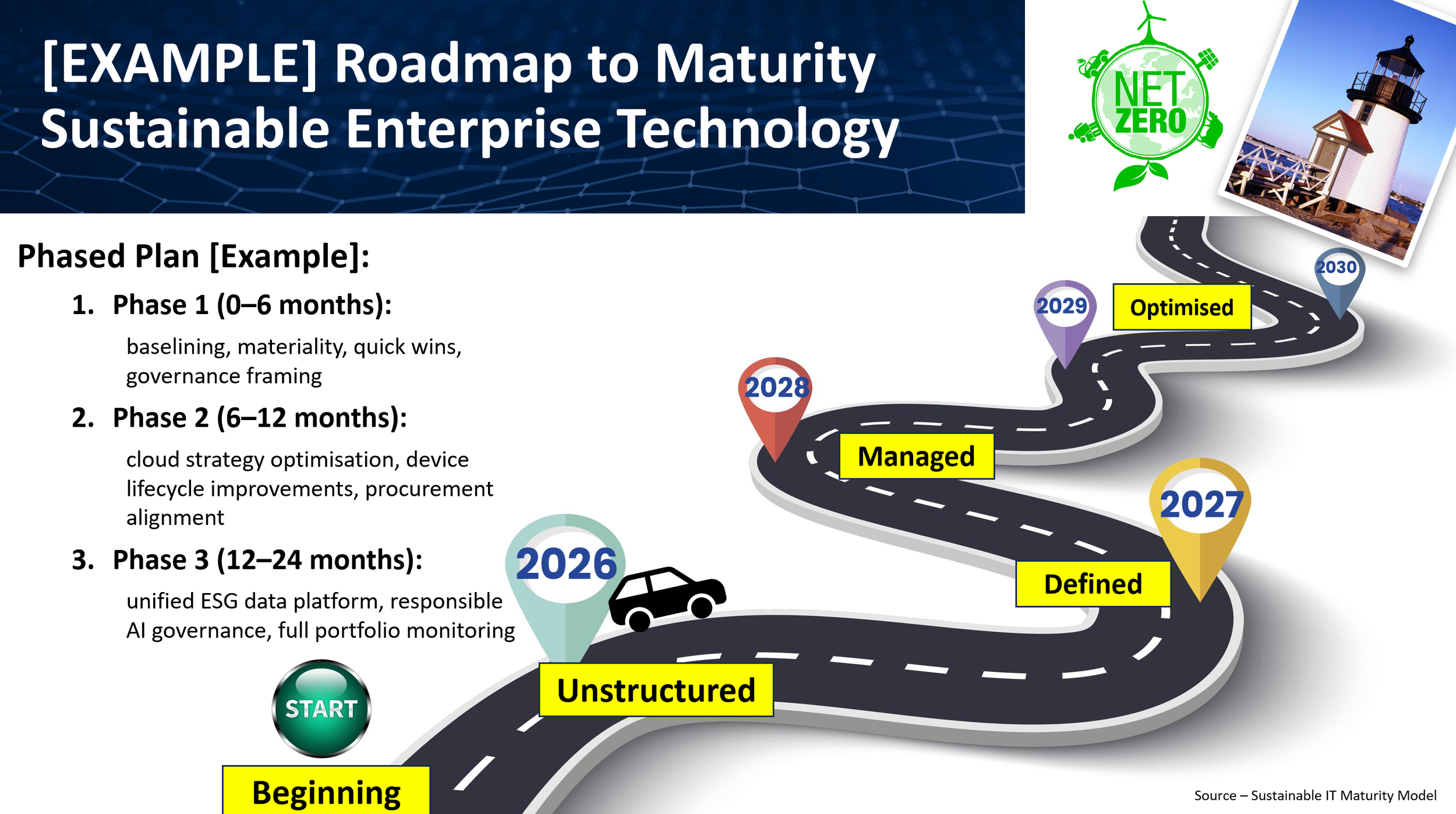
We concluded the session by walking through the Sustainable IT Maturity Model, a framework to move organisations from passive reporting to actionable data.
The five levels range from Level 1 (Beginning) to Level 5 (Optimising).
The Reality Check: Recent benchmarking shows that the average global organisation sits at a 2.3 out of 5. Most are stuck between "Unstructured" efforts and "Defined" policies.
The Lag: The area lagging furthest behind is Enterprise Architecture (scoring 1.8), suggesting that we are trying to fix problems downstream rather than designing sustainability into our systems from the start.
The Bottom Line
Digital sustainability has graduated. It is no longer a reputational badge for your website footer; it is a $30 billion market driven by strict compliance, rising energy costs, and the massive challenge of Scope 3 emissions.
The market no longer rewards promises; it rewards measurable outcomes.
Thank you to everyone who attended and to the team at Generate Zero for hosting such a vital conversation. If you are ready to move your organisation from Level 2 to Level 4, the time to start measuring your true digital footprint is now.
References