
Decarbonising the Future: Key Takeaways from London Climate Action Week 2026
London Climate Action Week 2026 marked a pivotal shift from climate target-setting to practical execution. Across 1,300 events, three interconnected themes emerged: the urgent need to mitigate Artificial Intelligence’s massive carbon and water footprint through "sustainability by design" and GreenOps; the critical bottleneck in green skills, with hiring demand rapidly outpacing workforce supply across all sectors; and the rise of decentralized consumer energy tech, highlighted by Octopus Energy’s groundbreaking home batteries and EV battery-swapping innovations.
Ultimately, LCAW 2026 demonstrated that while scalable climate solutions exist, rapid deployment and workforce mobilisation remain essential for a successful energy transition.

A Wake-Up Call for Boards and IT: ASIC’s Initial Findings on Mandatory Sustainability Reporting
This post explores ASIC’s initial findings on Australia’s new mandatory sustainability reporting regime. While standardisation has improved consistency, ASIC warns against misleading disclaimers, obscured material data, and poor risk identification.
For digital sustainability practitioners and IT leaders, the era of voluntary pledges is over. Companies must now rely on auditable, activity-based data rather than spend-based proxies, with IT directly accountable for decarbonisation targets. Ultimately, treating sustainability as a strict statutory obligation mitigates severe regulatory and commercial risks while unlocking significant opportunities in green financing, market access, and talent acquisition ahead of the June 2026 reporting deadline.
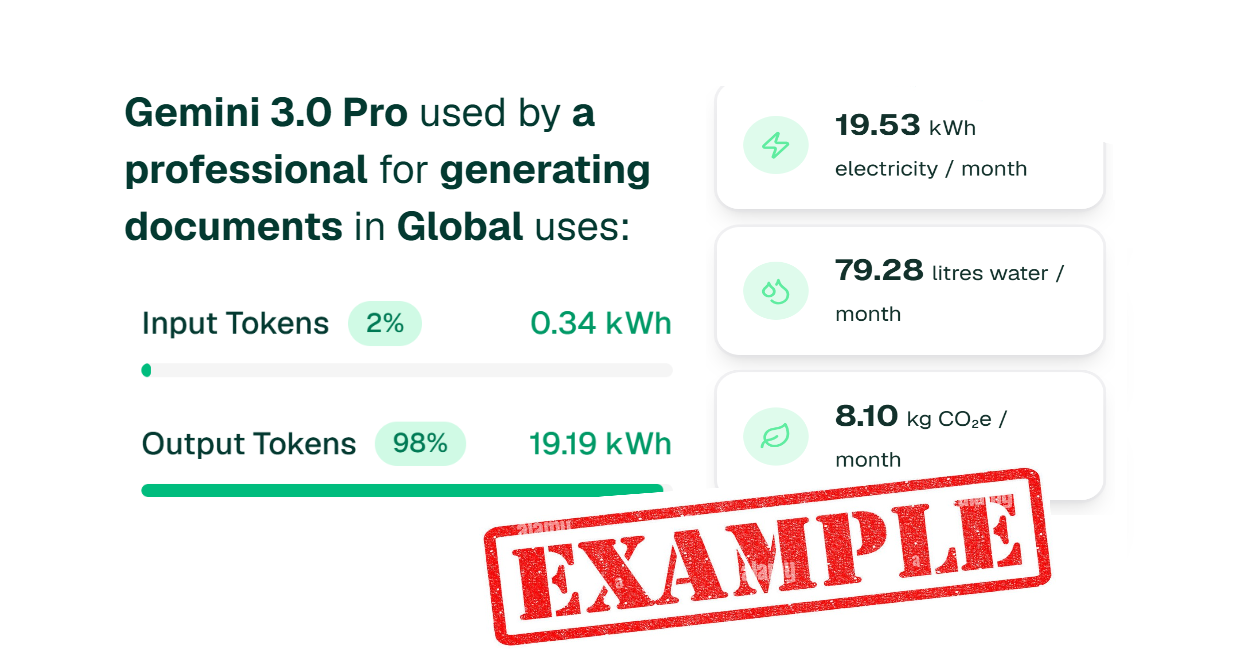
Demystifying the Environmental Footprint of AI: How to Calculate Energy, Carbon, and Water Consumption
This blog post explains the complexity of calculating the environmental footprint—energy, carbon, and water—of Artificial Intelligence, particularly Large Language Models (LLMs).
Because AI workloads are highly variable, accurate measurement requires granular, instance-level data across four areas: model and hardware specifications, token-level energy consumption, workload dynamics (like caching and batching), and local grid data.
Once measured, organisations can apply "AI GreenOps" to reduce their impact. By right-sizing models, optimising prompt lengths, and maximising hardware efficiency, businesses can sustainably manage their AI integration while minimising resource consumption and emissions.
From Ambition to Action: What the 2025 Global Sustainability Barometer Means for ANZ Tech and Sustainability Leaders
The 2025 Global Sustainability Barometer reveals a critical mandate for ANZ technology and sustainability leaders: transition from ambitious net-zero targets to tangible execution.
As the line between environmental responsibility and business performance vanishes, proving measurable ROI has become the primary catalyst for momentum. To succeed, organisations must transform IT into an enterprise-wide sustainability engine rather than operating in silos. Furthermore, leveraging advanced technologies like Predictive and Agentic AI is essential for moving from reactive reporting to autonomous, data-driven optimisation. However, leaders must first overcome significant data integration barriers to build unified platforms that drive real-time insights and competitive advantage.

Confronting the Elephant in the Room: AI, Data Centres, and the Path to True Digital Sustainability
Explores the environmental "elephant in the room" of the AI revolution: the immense resource consumption of physical data centres. Reflecting on a recent panel at Climate Action Week Sydney 2026, I contrast AI’s problem-solving "handprint" with its staggering ecological "footprint," noting that Sydney's data centres could consume 25% of the city's drinking water by 2030. To ensure sustainable digital transformation, the post outlines three critical imperatives: enacting strict policies requiring additional renewable energy, embracing circular economy practices for water and minerals, and implementing granular emissions tracking. Australia must act now to build sustainable digital infrastructure.

From Disclosure to Delivery: What the Latest World Benchmark Alliance Research Means for Digital Sustainability in Australia
Explore the critical gap between corporate sustainability commitments and actionable delivery in Australia, drawing on World Benchmarking Alliance (WBA) research presented at Climate Action Week Sydney ‘26.
While corporate governance around sustainability is improving, actual financial resourcing and execution lag significantly. The escalating environmental footprint of the digital sector, driven by AI and data centres, poses severe climate and water stress risks. Furthermore, Australian companies frequently overlook Scope 3 emissions and crucial social dimensions, including Indigenous rights. To achieve true digital sustainability, tech leaders must transition from high-level disclosures to comprehensive, resourced, and socially equitable transition plans.

GREEN TECH Month: Top 10 Things Tech Workers Can Do to Reduce Their Carbon Footprint
Practical, field-ready actions for tech professionals to shrink the ICT sector’s carbon footprint.
Framing Sustainable IT around Footprint (harm minimisation), Handprint (positive enablement), and Heartprint (societal well-being), it translates high-level sustainability into ten concrete steps: extend hardware life, code for energy efficiency, delete dark data, choose low-carbon cloud regions, adopt Green AI, optimize video conferencing, set aggressive power management, embrace circularity, leverage purchasing power, and champion sustainability within teams. It highlights governance implications, measurable impacts, and the role of individuals in driving systemic change toward a greener digital future.
From "Black Box" to Green Ledger: Unlocking Digital Sustainability with TBM
Technology Business Management (TBM) can help transform digital sustainability by turning IT from a black box into a granulated, accountable resource. In this post I outline how TBM links IT cost to business value and environmental impact, enabling precise hotspot identification, GreenOps accountability, and Scope 3 transparency. It highlights tracking AI workloads, hardware lifecycles, and consumption at the application level to drive targeted emissions reductions, justify sustainability investments, and align CIO, CFO, and CSO goals in the era of rigorous reporting (e.g., CSRD). The result is a shared language for governing digital sustainability across the enterprise.

CASE STUDY: UK Gov Unlocking Hidden Tech Carbon: Insights for Australian Tech Leaders
Case study on applying UK Government Digital Sustainability Alliance (GDSA) Scope 3 insights to Australia’s tech sector. It emphasises that Scope 3 emissions—often 70–90% of digital carbon—require a practical “Operate and Improve” approach: baseline measurement, engaged procurement, and circular reuse.
Key levers include extending asset life (right-sizeing), sustainable procurement with product-level data and second-life hardware, and correcting myths that green energy alone eliminates carbon. The post translates these insights into Australian practice: align with federal targets, challenge global suppliers, and prioritize logistics to reduce Scope 3 more than Scope 2. A concrete three‑phase action plan and checklist guide practitioners toward tangible reductions in ICT emissions.
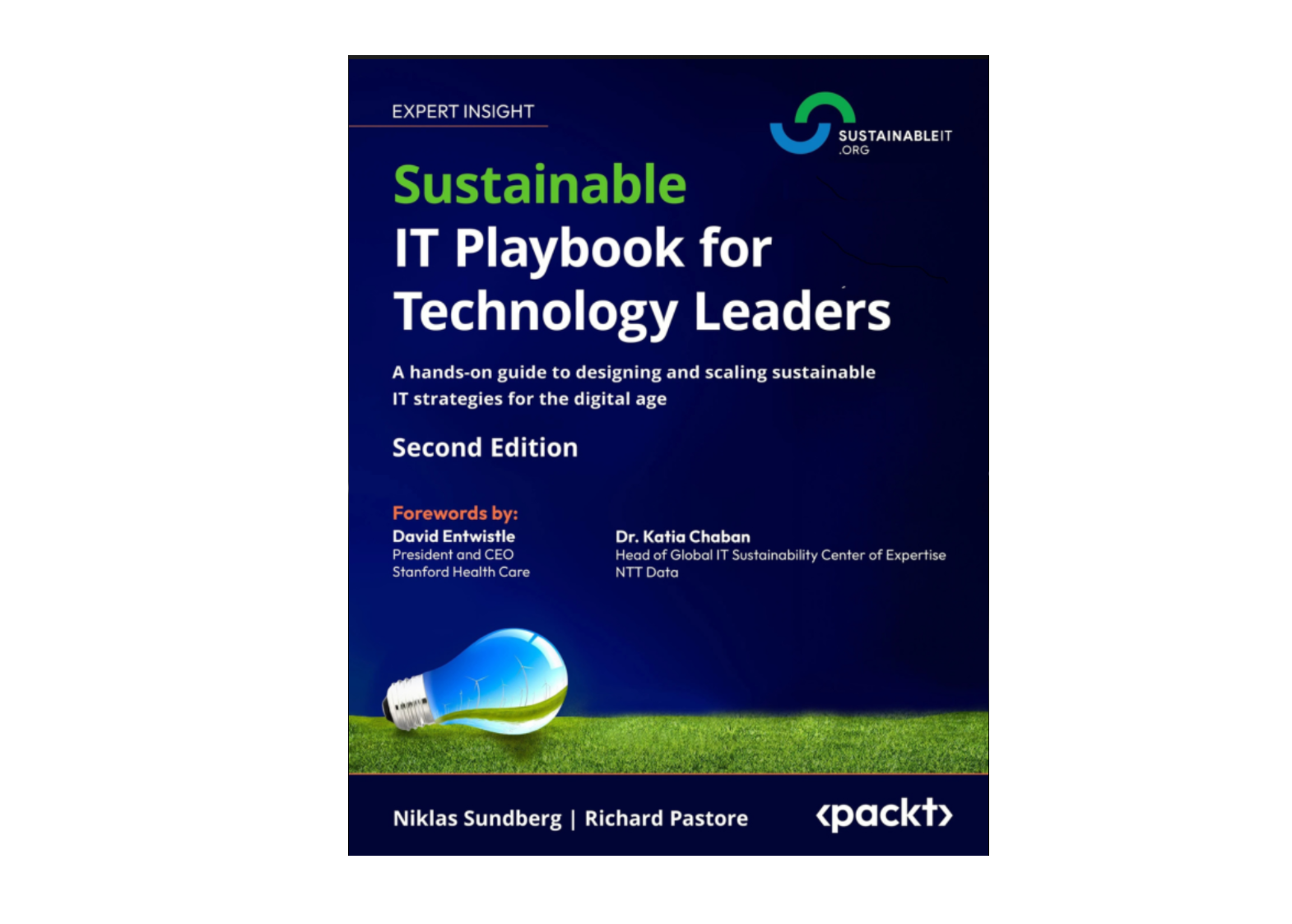
BOOK Review: Sustainable IT Playbook
Sustainable IT Playbook for Technology Leaders (Second Edition) reframes IT leadership around climate responsibility as a core strategic imperative. The book guides CIOs, CTOs, and senior IT leaders through a three-part framework—why, what, and how—bridging ethical rationale with actionable practice.
It emphasises measurable outcomes via an emissions baseline, governance structures, and practical KPIs, complemented by the Sustainable IT Reference Model and maturity dashboards. With updates on responsible AI governance, risk, and regulatory context, the work includes real-world case studies and downloadable templates from SustainableIT.org. While broad in scope, it offers a solid, implementable road map for translating sustainability into scalable IT transformation.

Beyond the Cloud: Why Digital Sustainability is Australia’s Next Environmental Frontier
The World Economic Forum examines the environmental impact of Australia's digital sector and advocates for a "Nature Positive" transition by 2030. The tech industry's hidden costs include 1.5 trillion litres of annual water consumption globally, energy demands rivalling Japan's usage, and 60 billion kg of e-waste yearly. Addressing these impacts could unlock $800 billion globally by 2030. Key Australian priorities include designing for circularity, investing in e-waste infrastructure , implementing closed-loop water systems, and decarbonising building materials. Success requires coordinated action among tech companies, policymakers, and customers. The central argument: digital sustainability is both an environmental necessity and a strategic economic opportunity for Australia's tech sector.

CASE STUDY - Atlassian: The Cloud, AI, and Carbon
Atlassian, a cloud-based enterprise software company, is navigating “digital sustainability” as it pursues a net-zero target by 2040 amid rapid growth in AI.
Key challenges, including heavy Scope 3 emissions tied to hyperscaler cloud providers, the rising energy and water footprint of AI, the complexity of tracking emissions from a distributed workforce, and tightening global sustainability regulations. Opportunities for climate leadership through using procurement power to push suppliers toward science-based targets, collaborating with partners to set and meet net-zero goals, and helping customers accelerate their own climate transitions. The case study emphasises transparent reporting, proactive risk management (i.e. work-from-home energy use and exploring VPPAs), and the central role of collaboration across companies and teams to decarbonise the broader digital ecosystem.

CASE STUDY - Mastercard: Decoupling Growth from Carbon
Mastercard’s push to decouple business growth from carbon emissions by embedding sustainability into IT operations. How the company tackled data- and culture-driven challenges, pursued cloud and asset optimisation, and implemented carbon-aware FinOps and governance across multi-cloud and on-prem assets.
Resulting in a tangible dividend: about 15% additional cost savings and roughly US$2 million in savings, alongside progress toward Net Zero by 2040, illustrating how making sustainability a core IT prerogative can drive both environmental and economic performance.
AI and the Australian IT Leader: The Imperative for Sustainable Innovation
Artificial intelligence (AI) is rapidly emerging as one of the defining forces of the decade, standing alongside the urgent global challenge of climate change. With worldwide AI investment forecast to exceed US$600 billion by 2028, AI's massive appetite for computational power creates a significant environmental footprint that Australian IT leaders can no longer ignore.
The acceleration of AI workloads is straining resources globally and locally: Energy and Emissions, Water Consumption and E-Waste.
For Australian organisations, sustainable AI adoption is a critical strategic imperative. The goal is to pursue innovation through sustainability, ensuring that our digital evolution supports, rather than undermines, our climate commitments.

GreenOps in Action: How IT Teams Can Drive Sustainability and Save Costs Now
Sustainable IT is a non-negotiable constraint shaping every IT decision. IT leaders, cloud practitioners, and sustainability champions can drive real, measurable progress with a GreenOps focus that spans the entire technology portfolio—from data centres to devices and SaaS.

Climate Crossroads: How a Warming Australia Puts Our Digital Future at Risk
As Australia’s economy continues to ride the tidal wave of digital transformation, our technology sector stands as a national beacon of innovation and growth. Yet this digital future sits at a climate crossroads. The latest National Climate Risk Assessment makes clear that the very backbone of our digital economy—telecoms, energy, data centres, and critical supply chains—faces escalating threats from heat, bushfires, floods, and extreme weather. These hazards don’t just threaten infrastructure; they ripple through productivity, insurance costs, R&D investment, and the skilled workforce that powers tech advancement.
In this moment, tech professionals have a pivotal role to play.

BIG TECH Navigating the Sector’s Climate Imperative: A Call for Transparency and Strategic Disclosure
The technology sector is facing a "climate strategy crisis" as rapid growth in areas like AI leads to soaring energy demands, undermining existing climate pledges. Many tech companies' greenhouse gas (GHG) emission targets are losing meaning due to this unconstrained energy consumption, particularly from data centres and hardware production, coupled with outdated market-based accounting methodologies that can obscure actual emissions.

Essential Questions for Boards: Preparing Your IT Team for Climate Reporting
As the deadline for mandatory climate reporting passes, organisations must ask: Is our enterprise technology team prepared to meet the challenges ahead?
From January 2025, the first of 6,000 Australian businesses will begin preparations for this significant uplift and and will impact many more as sustainability becomes a focal point in corporate procurement processes.

From Talk to Action: Digital Carbon Footprint - From Greenwash to Accountability
How do we measure, report, and reduce the environmental impact of cloud computing, data centres, and digital applications? This session as part of CAWSYD’25 cut through greenwashing to explore practical strategies for businesses to track and manage their digital emissions with integrity.