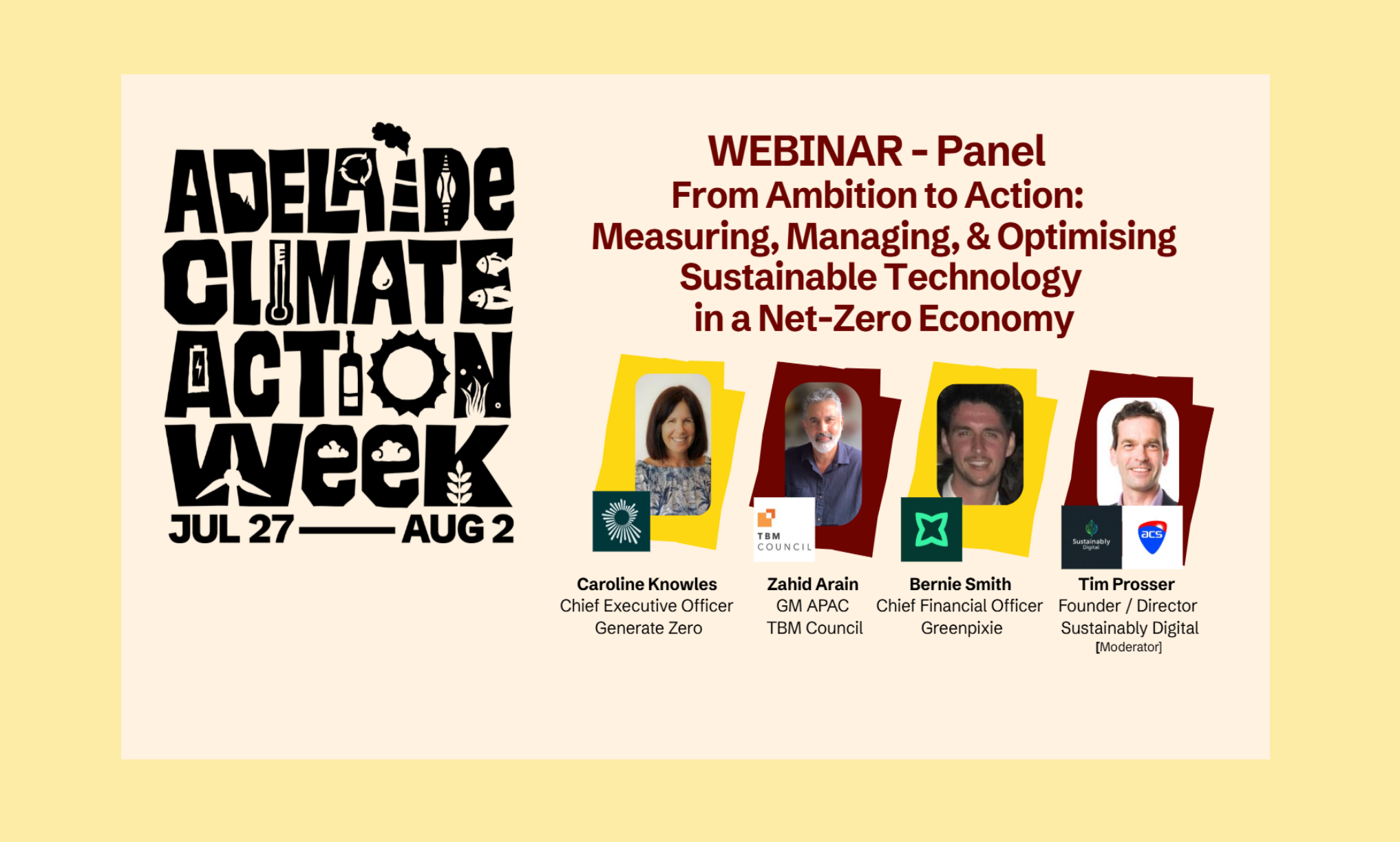
The Hidden Climate Cost of Our Digital Lives: Key Takeaways from Our "Ambition to Action" Webinar
Key insights from the recent "Ambition to Action" webinar regarding the hidden environmental costs of our growing digital infrastructure held as part of Adelaide Climate Action Week.
It warns that standard cloud provider reports are insufficient for strict climate compliance, urging organisations to seek granular, audit-ready data. By enriching billing data with accurate energy metrics, businesses can implement "GreenOps" to rapidly reduce digital waste.
Ultimately, scaling digital sustainability requires forming a "Sustainability Triangle"—breaking down silos between IT, finance, and sustainability teams to treat tech emissions with the same rigor as financial reporting.
Turning Digital Waste into $16.1M: The ‘Horizon Pacific Bank’ GreenOps Case Study
Blog spotlight ‘Horizon Pacific’ Bank’s Sustainable ICT Optimisation Programme (GreenOps) as a blueprint for digitally enabled sustainability.
With an $1.9m investment over 18 months, the initiative targets 5% waste reduction from a $160m IT spend, delivering a 10.1-month payback and $16.1m three-year value.
Beyond cost savings, the case underlines regulatory risk mitigation under Australia’s mandatory climate disclosures and enhanced access to green financing. The study offers finance, technology, and sustainability professionals a practical, cross-functional framework for aligning IT governance with strategic, regulatory, and market opportunities in a competitive banking landscape.
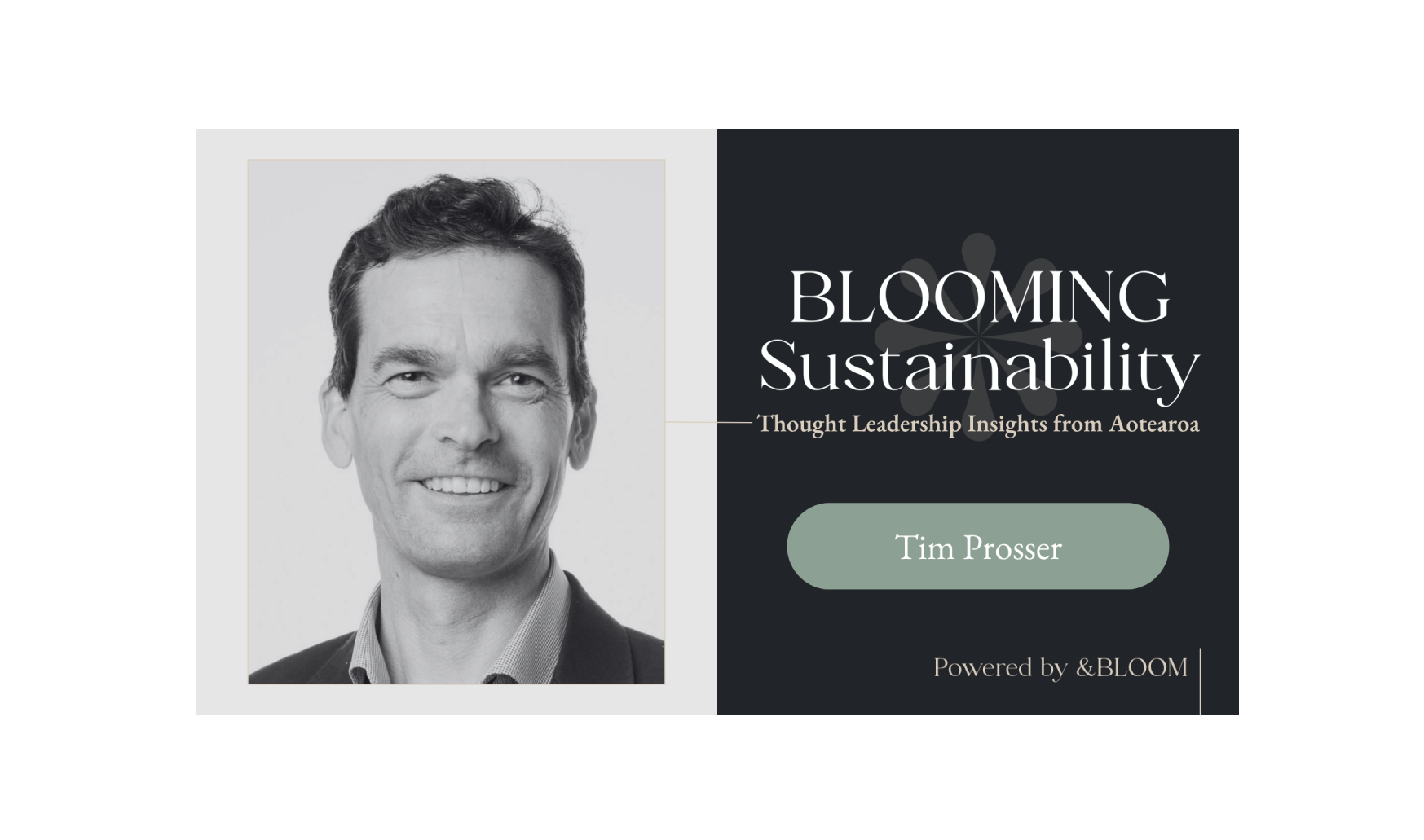
The Cloud Has Weight: My Feature in Blooming Sustainability Edition 58
In The Cloud Has Weight, in this guest article our founding director Tim Prosser exposes the hidden physical footprint of digital operations. He critiques inaccurate spend-based carbon measurements, advocating instead for granular, activity-based tracking.
Highlighting rising procurement demands for emissions transparency, Prosser demonstrates how digital sustainability aligns with financial ROI—such as decommissioning idle "zombie servers" to simultaneously cut costs and carbon. He emphasises New Zealand's competitive green energy advantage and urges organisations to make sustainability a core IT design constraint early in the development process. Ultimately, Prosser calls for vital collaboration between IT, finance, and sustainability teams to reduce the digital economy's environmental impact.

PODCAST: Your Cloud Has a Dirty Secret: The Hidden Carbon Footprint of Your Company’s Tech (Part 1)
In this episode of the Green Fix Podcast, I return to discuss the maturing landscape of Digital Sustainability. Hosts Loreto Gutierrez and Dan Leverington explore the hidden environmental costs of enterprise technology, warnings against relying on unverified vendor carbon data. The discussion highlights staggering emission reporting variances within the financial sector and the urgent need to transition from spreadsheets to auditable, high-provenance data. Introducing the "Sustainability Value Triangle"—aligning Finance, IT, and Sustainability teams—to ensure accurate climate disclosures and mitigate greenwashing risks in an increasingly regulated market.
From "Black Box" to Green Ledger: Unlocking Digital Sustainability with TBM
Technology Business Management (TBM) can help transform digital sustainability by turning IT from a black box into a granulated, accountable resource. In this post I outline how TBM links IT cost to business value and environmental impact, enabling precise hotspot identification, GreenOps accountability, and Scope 3 transparency. It highlights tracking AI workloads, hardware lifecycles, and consumption at the application level to drive targeted emissions reductions, justify sustainability investments, and align CIO, CFO, and CSO goals in the era of rigorous reporting (e.g., CSRD). The result is a shared language for governing digital sustainability across the enterprise.

The Decisive Decade: Why Australia’s Climate Tech is Moving from Breakthroughs to Billion-Dollar Scale
The 2025 Australian Climate Tech Industry Report signals that the sector has moved beyond early-stage innovation to focus on the essential "one to one hundred" scaling phase necessary for deep decarbonisation.
This momentum is supported by significant capital flow, with over $680 million in Venture Capital raised in 2025, and a growing workforce of more than 7,000 people.
For enterprise, the introduction of mandatory climate-related reporting for approximately 6,000 Australian companies is a primary driver, forcing a strategic shift towards evidence-based solutions. However, scaling capital-intensive deep tech requires overcoming the reliance on offtake agreements ("If you build it, we will buy it"), which are identified as the missing link for securing financing and commercialising innovations.

CASE STUDY - Mastercard: Decoupling Growth from Carbon
Mastercard’s push to decouple business growth from carbon emissions by embedding sustainability into IT operations. How the company tackled data- and culture-driven challenges, pursued cloud and asset optimisation, and implemented carbon-aware FinOps and governance across multi-cloud and on-prem assets.
Resulting in a tangible dividend: about 15% additional cost savings and roughly US$2 million in savings, alongside progress toward Net Zero by 2040, illustrating how making sustainability a core IT prerogative can drive both environmental and economic performance.

Unlocking Measurable Impact: Why the Sustainability Value Triangle is Essential for Digital Sustainability
Is your organisation unlocking genuine value from its sustainability efforts, especially in the digital realm?
New research shows that moving beyond ambition to measurable impact requires deep integration across the Sustainability Value Triangle: Finance, IT, and Sustainability.
Advanced Integrators consistently achieve higher sales growth, stronger business cases, and better access to quality data.
Crucially, the IT function is pivotal, tasked with providing the automated systems necessary for reliable data collection and justification of investment.
Learn how to bridge the gap between commitment and operational reality and drive tangible commercial success.