
GREEN TECH Month: Top 10 Things Tech Workers Can Do to Reduce Their Carbon Footprint
Practical, field-ready actions for tech professionals to shrink the ICT sector’s carbon footprint.
Framing Sustainable IT around Footprint (harm minimisation), Handprint (positive enablement), and Heartprint (societal well-being), it translates high-level sustainability into ten concrete steps: extend hardware life, code for energy efficiency, delete dark data, choose low-carbon cloud regions, adopt Green AI, optimize video conferencing, set aggressive power management, embrace circularity, leverage purchasing power, and champion sustainability within teams. It highlights governance implications, measurable impacts, and the role of individuals in driving systemic change toward a greener digital future.
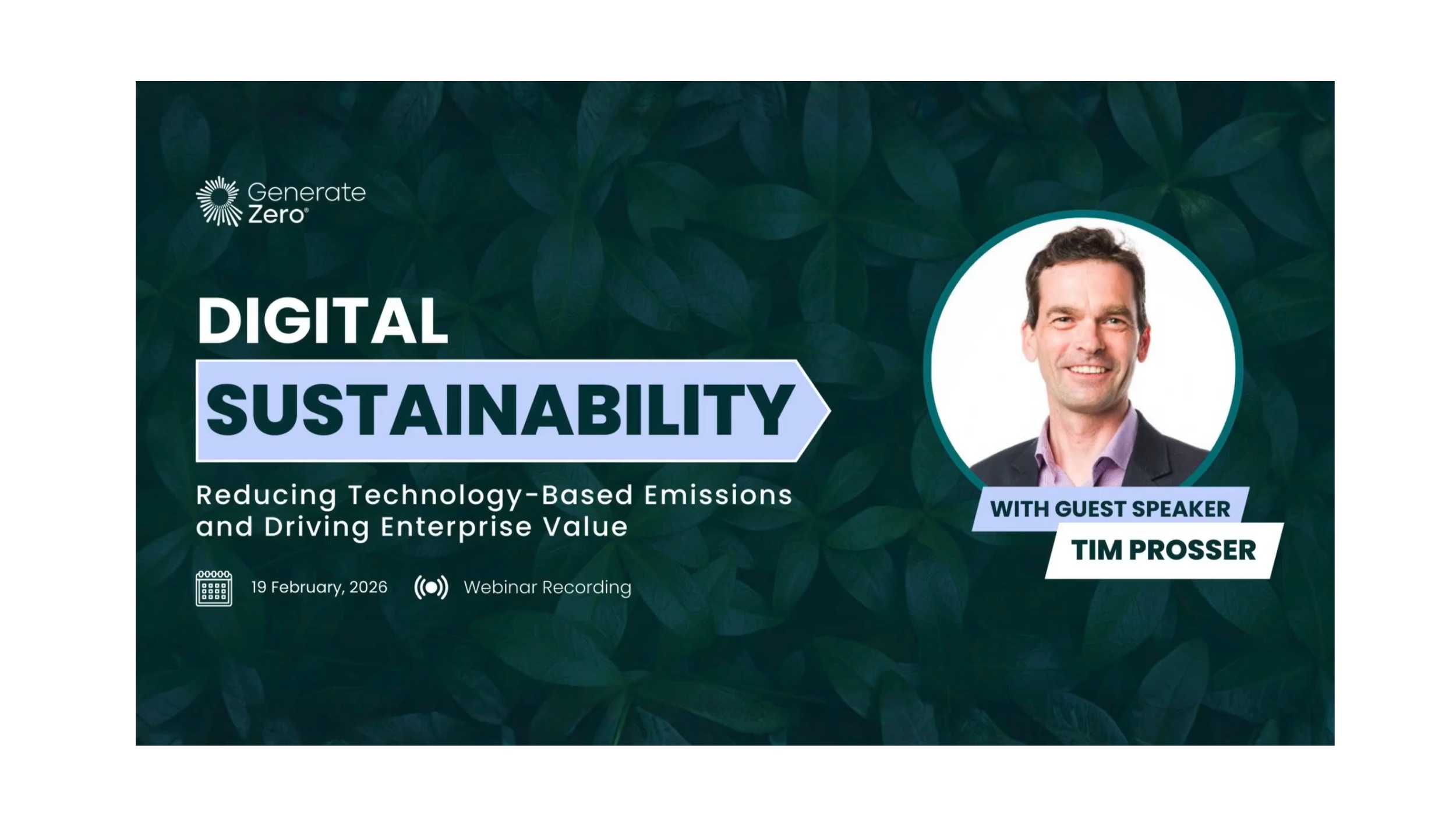
WEBINAR - Digital Sustainability: Reducing Technology-Based Emissions and Driving Enterprise Value
Digital Sustainability is moving from peripheral ESG topics to core enterprise strategy. This blog summarises a webinar with Generate Zero on reducing technology-based emissions and unlocking business value. It highlights a historic blind spot: the digital realm, traditionally overlooked in sustainability audits. By reframing digital impacts as strategic opportunities, the discussion offers key takeaways and candid insights on integrating digital practices into broader decarbonisation efforts and value creation for the enterprise.
The CTO’s New Mandate: From Tech Enabler to Sustainability Orchestrator
A 2026 global study presented at this years World Economic Forum in Davos reveals a pivotal shift in corporate sustainability: it has transitioned from a boardroom ambition to a technology execution challenge. Surveying 600 Chief Technology Officers, the research confirms that CTOs are now the "operational backbone" of the green agenda, moving beyond support roles to actively drive decarbonisation through code and infrastructure. While economic incentives currently prioritise energy efficiency and AI optimisation, significant barriers remain, including "digital debt," poor data quality, and a critical shortage of "Green Technologists" who bridge the gap between IT and environmental science. The future requires systemic, not just opportunistic, change.

The 2026 Australian Cloud Reality Check
The 2026 Australian Cloud Reality Check assesses the carbon-intensity of regional cloud infrastructures amid the global shift toward Sustainability by Design. Despite a solar-led expansion, Australian cloud regions exhibit a driver of high emissions, routinely earning low E/F grades versus European leaders. A notable outlier is New Zealand’s `newzealandnorth` (Grade B), offering markedly lower carbon footprints (upto 90%) and meaningful latency compatibility for ANZ workloads. GreenOps-driven strategies: relocate non-latency-sensitive and batch workloads to lower-impact regions, optimise utilisation, and time-shift processing, while respecting data sovereignty. It emphasises proactive, architecture-level decisions to achieve Net Zero targets in 2026.
GreenOps in Action: How IT Teams Can Drive Sustainability and Save Costs Now
Sustainable IT is a non-negotiable constraint shaping every IT decision. IT leaders, cloud practitioners, and sustainability champions can drive real, measurable progress with a GreenOps focus that spans the entire technology portfolio—from data centres to devices and SaaS.